
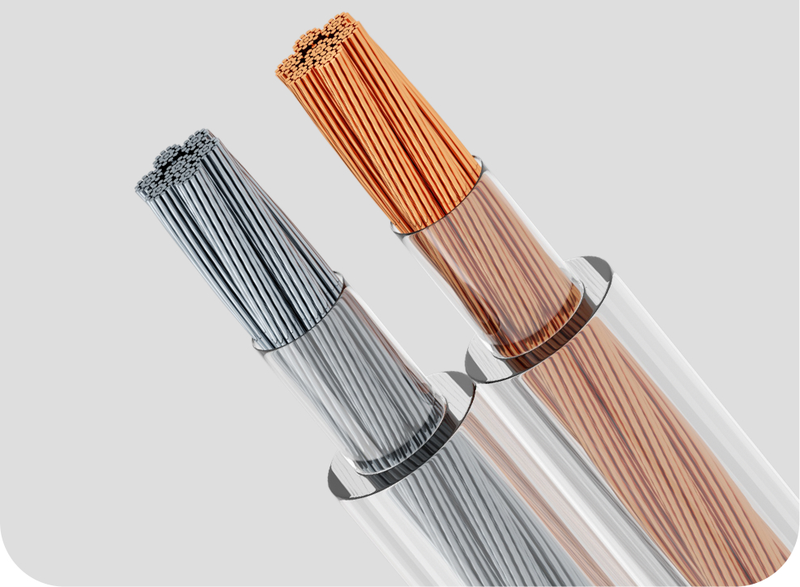
Start with the complete buying decision
Speaker cable is unshielded, rated by strand count (100–500), and suited to fixed loudspeaker runs where interference is not a concern. Stage and touring cable adds a professional copper-braid shield, in 2–4 cores from 1.0 to 4.0 mm², for live and portable use where noise rejection and durability matter. Choose by run length, power, interference exposure and whether the cable is fixed or moved.
1. The core difference: shielding and duty
Speaker cable carries amplified signal on unshielded conductors; it is simple, cost-effective and right for permanent installations. Stage cable adds a braided shield and a tougher construction for live sound, touring and portable rigs, where interference and repeated handling are real risks.
| Need | Product | Key inputs |
|---|---|---|
| Fixed loudspeaker runs | Speaker cable | Strand count, run length, coil quantity |
| Live / touring / portable | Stage audio cable | Cores, section, shield, run length |
| Multi-channel runs | 4-core stage cable | Core count, section, channel plan |
2. Speaker cable: read the strand count
Speaker cable is rated by strand count (100–500), which reflects the effective conductor cross-section. Longer runs and higher power need a larger cross-section to limit resistance and signal loss, so match the strand count to run length and amplifier load.
3. Stage cable: cores, section and shield
Stage and touring cable comes in 2–4 cores from 1.0 to 4.0 mm². Heavier sections and 4-core builds suit longer or multi-channel runs, while the braided shield rejects interference on live stages. Specify the core count, cross-section and run length together.
4. Specify by run, not by name
Give the run length, power/channel requirement and whether the cable is fixed or moved. That defines whether you need unshielded speaker cable by strand count or shielded stage cable by core and section — and the jacket is confirmed against the venue conditions.
Procurement checklist
- 01Fixed installation vs. live/portable use
- 02Run length per line
- 03Amplifier power / channel count
- 04Speaker cable: strand count per run
- 05Stage cable: cores and cross-section
- 06Shield requirement
- 07Jacket and venue conditions
- 08Coil quantity and labels
Common mistakes
- Using unshielded speaker cable on a live stage
- Ignoring run length when choosing strand count
- Specifying stage cable without the core count
- Mixing channels without a labelled schedule
- Assuming one construction fits both fixed and touring use
Questions buyers ask next
Can I use speaker cable for a live stage?
It is not recommended. Live and touring runs benefit from the shield and tougher construction of stage cable for interference rejection and durability under repeated handling.
What strand count do I need?
Match it to run length and amplifier load — longer or higher-power runs need a larger effective cross-section (higher strand count) to limit loss. State the run length so it can be confirmed.
Sources & further reading
Official material used for the factual statements on this page.
- BeldenSpeaker Cable