
Start with the complete buying decision
Use standard stock when an existing specification and neutral presentation meet the need. Use private label when the base cable can remain standard but the brand, color, label or packaging changes. Use full custom when the electrical construction, connector, molding, material or tooling changes. In every case, lock one approved specification, artwork set, sample scope and revision for each SKU before bulk release; MOQ, tooling and timing remain quote-specific until those inputs are reviewed.
1. Choose standard stock, private label or full custom
The first decision is not the logo position. It is how far the product must move away from an existing, validated construction. Keeping that boundary explicit prevents a packaging request from quietly becoming an engineering project.
| Route | Use it when | Release control |
|---|---|---|
| Standard stock | An existing product and neutral packing meet the requirement | Confirm the exact offered specification, test scope and packing unit |
| Private label | The base construction remains suitable but brand, color, print, label or pack changes | Approve product identity and artwork against the physical sample |
| Full custom | Construction, connector, molding, material, dimensions or tooling must change | Complete technical review and validation before branding is released |
2. Prepare one RFQ line for every branded SKU
Start with a line-item product list. Give each length, color, connector combination, packing unit or market-specific version its own part number so that the supplier can identify where specifications, artwork and quantities differ.
For every line, state the product family, construction or performance requirement, connector and length, color, target annual volume, first-order quantity, destination market, required test or document scope, unit packing, master-carton need and target release window. Mark unresolved inputs instead of allowing silent assumptions.
- Buyer part number and product description
- Technical specification, drawing or approved reference sample
- Length, color, connector and variant matrix
- First order, annual volume and forecast pattern
- Destination market and responsible compliance owner
- Unit pack, carton, label, barcode and pallet inputs
- Sample purpose, inspection scope and required documents
3. Treat printing, labels, barcodes and marks as controlled product data
Build an artwork matrix before design work begins: jacket print line and repeat direction; jacket color reference; label content and position; buyer part number; unit-pack copy; barcode data; inner and master-carton marks; language; and any applicable product or certification marks. The technical specification and the artwork must use the same model names, ratings and quantities.
GS1 says the brand owner that owns the trade-item specification is normally responsible for allocating the GTIN, including an importer or wholesaler selling the item under its own brand. GS1 also assigns identity across packaging levels, so unit, case and pallet data should not be improvised independently by the supplier.
Barcode artwork needs a verification step, not only a visual approval. GS1 notes that placement affects scanner access and read performance, with folds, seams, edges, glare and damage-prone areas creating risks. Confirm the encoded data, size, quiet area, contrast, location and a scan check on the intended packaging material.
Compliance and program logos are not decorative assets. For the EU, CE marking is used only when applicable rules require it, and a business selling a product made for it under its own name or brand can carry manufacturer responsibilities. USB-IF and HDMI trademarks have their own qualification and licensing conditions. Confirm the exact product, authorization and destination before adding any mark to cable or packaging artwork.
4. Approve artwork and the physical sample before bulk release
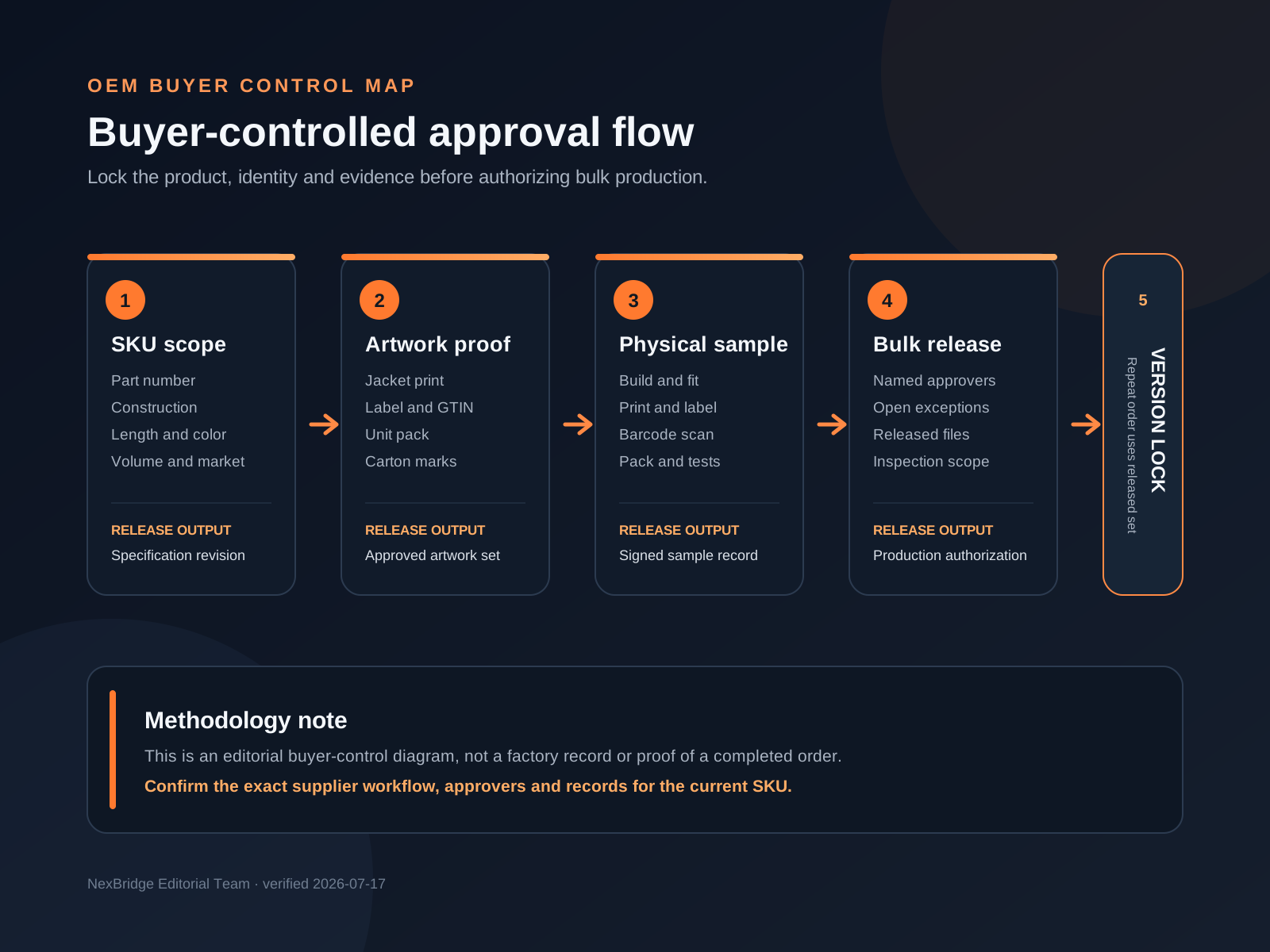
Use a staged approval record: first lock the SKU specification and revision; then approve digital artwork; then inspect the physical sample against a named checklist; finally issue a pre-production release that identifies the approved files and sample status. A logo proof alone does not approve conductor, connector, dimensions, performance or packout.
The workflow diagram on this page is a buyer-side control map, not a supplier factory record. Adapt it to the actual quotation, sample and production process, and record who can approve technical, brand, compliance and commercial changes.
- Digital proof: spelling, dimensions, colors, codes, marks and placement
- Physical sample: construction, fit, print, label, pack and agreed test points
- Approval record: SKU, revision, date, approver, exceptions and reference files
- Production release: approved sample status plus the exact specification and artwork versions
5. Review MOQ, tooling and packaging as linked dependencies
There is no universal private-label cable MOQ or lead time in this guide. Ask the quotation to separate the effects of base cable construction, per-SKU quantity, color or print setup, custom connector or mold work, packaging material and print run, testing, documents and sample iterations.
SKU fragmentation matters: one total order split across many lengths, colors, barcodes and cartons can create different constraints from one repeated SKU. Request a line-by-line assumptions and exceptions table so that a proposed consolidation, packaging change or volume change can be reviewed without hiding its effect on the other controls.
6. Keep repeat orders tied to an approved version set
Create one release index for every SKU that names the current technical specification, artwork, barcode, unit pack, carton mark, approved sample and inspection requirement. Put the same revision references on the purchase order and supplier confirmation.
When anything changes, record what changed, why, who approved it and whether a new sample, test, document or product identifier is needed. GS1's management standard assigns identity at the new-product and packaging-hierarchy levels, so barcode impact belongs in the change review rather than at final printing.
Procurement checklist
- 01List every product family and buyer part number
- 02Separate each length, color, connector and packing variant
- 03Attach the technical specification, drawing or reference sample
- 04State first-order quantity, annual volume and forecast pattern
- 05Name the destination market and compliance owner
- 06Provide jacket print, color and orientation requirements
- 07Provide unit-label content, location and material requirement
- 08Assign barcode data and packaging hierarchy ownership
- 09Provide unit-pack, carton and pallet-mark requirements
- 10Define the physical sample and test approval checklist
- 11Name the approvers and released file revisions
- 12Require assumptions, exceptions and changes to be confirmed in writing
Common mistakes
- Starting artwork before the technical SKU matrix is stable
- Using one part number for materially different lengths or configurations
- Letting the supplier invent barcode data or product claims
- Adding certification or program logos without confirming authorization and scope
- Approving a logo proof as if it were a complete product sample
- Accepting a universal MOQ or lead time before the SKU and packaging split is known
- Reordering from an old email attachment without a released revision index
Questions buyers ask next
What is the difference between private label and a full custom cable?
Private label usually keeps a suitable base construction while changing product identity, color, print, labels or packaging. Full custom changes technical or mechanical elements such as the conductor build, connector, molding, dimensions, material or tooling and therefore needs a deeper engineering and validation scope.
Who should provide the barcode for a private-label cable?
The brand owner should assign ownership explicitly. GS1 says the organization that owns the trade-item specification is normally responsible for allocating the GTIN; that can be an importer, wholesaler or retailer selling the item under its own brand.
Technical source: GS1Can CE, USB or HDMI logos be added to the packaging artwork?
Only after the exact product and authorization path are confirmed. CE marking applies only where the relevant EU rules require it, while USB-IF and HDMI trademarks have separate qualification and licensing conditions. Keep every mark out of the released artwork until its scope and owner are documented.
Technical source: European Commission / Your EuropeWhat should a private-label sample approval cover?
Name the points the sample is intended to approve: technical construction, dimensions, connector or termination, color, print, label, barcode scan, unit pack, carton information and agreed performance checks. Record exceptions and the exact specification and artwork revisions released for production.
What is the minimum order for private-label cable?
It is quote-specific. The result depends on the base construction, SKU split, print and color setup, custom parts or tooling, packaging format, testing and sample scope. Submit the first-order quantity and annual volume for every SKU and ask the supplier to state assumptions and exceptions line by line.
Sources & further reading
Official material used for the factual statements on this page.
- GS1Retrieved Who is responsible for numbering trade items?
- GS1Retrieved GTIN Management Standard
- GS1Retrieved 2D Barcode Playbook for Creation and Printing
- European Commission / Your EuropeRetrieved CE marking — rules, responsibilities and technical documentation
- USB Implementers ForumRetrieved USB-IF Logo Trademark License Agreement and Usage Guidelines
- HDMI Licensing AdministratorRetrieved HDMI Adopted Trademarks and Logo Usage Guideline