
Start with the complete buying decision
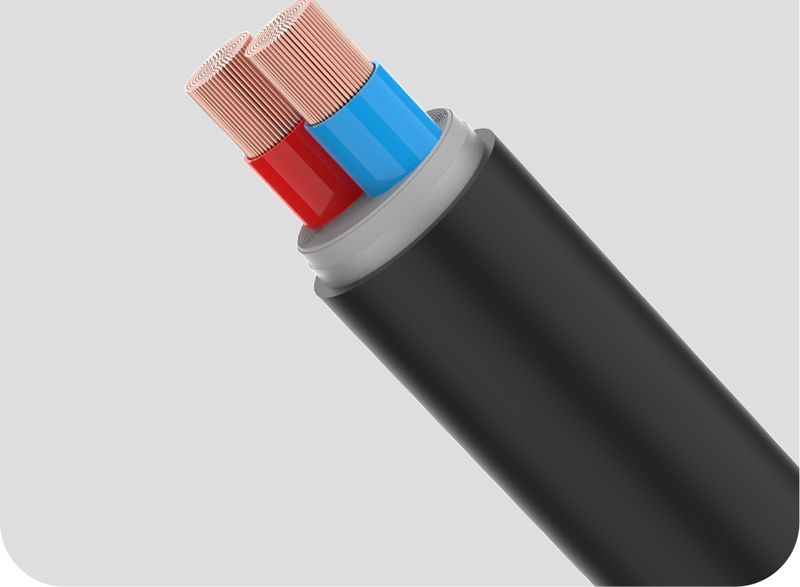
Separate three needs first: sheathed flexible cable (RVV / RVVP) for fixed and machine power, flexible wire (RVB / RVS / RVVP) for internal and lighting runs, and finished power cords for plug-and-play equipment. For each, confirm conductor material, cross-section, core count and — for cords — the destination plug standard and equipment connector.
1. Identify which power product you need
'Power cable' can mean very different products. Decide whether you are wiring a fixed installation, running internal or lighting circuits, or supplying a ready-to-use lead for equipment, because that decision drives every other input.
| Need | Typical product | Key inputs |
|---|---|---|
| Fixed / machine power | RVV sheathed, RVVP shielded | Cores, section, shield, standard |
| Internal / lighting runs | RVB / RVS / RVVP wire | Type, section, coil quantity |
| Equipment supply lead | Finished power cord | Plug market, equipment end, length |
2. Confirm conductor material and section
Conductor material and cross-section drive current capacity, voltage drop and compliance. State whether you require pure copper or copper-clad aluminium, and give the section (mm²) for each line rather than a single figure for the whole order.
- Conductor material (pure copper vs. CCA)
- Cross-section per line (mm²)
- Core count and colour code
- Standard or buyer drawing that controls the item
3. Decide shielding and jacket
Add a shield (RVVP) where the circuit runs near signal cable or in an electrically noisy environment. Match the jacket to the routing: indoor PVC, or a construction suited to the mechanical and environmental exposure of the run.
4. For finished cords, name the destination plug
Finished power cords must match the destination market's plug standard and the equipment's inlet. The IEC World Plugs reference shows how plug type and voltage vary by country, so state the destination and equipment connector (for example IEC C13/C14) before quotation.
Procurement checklist
- 01Power product type (cable, wire or cord)
- 02Conductor material per line
- 03Cross-section and core count
- 04Shield requirement
- 05Jacket and routing environment
- 06Applicable standard
- 07Destination plug market (cords)
- 08Equipment connector / IEC inlet (cords)
- 09Length, coil or packing unit
- 10Quantity and label requirements
Common mistakes
- Ordering 'power cable' without stating a cross-section
- Assuming CCA and pure copper are interchangeable
- Omitting the shield decision near signal cable
- Requesting cords without naming the destination plug standard
- Combining several sections into one quantity line
Questions buyers ask next
What is the difference between RVV and RVVP?
RVV is a sheathed flexible power cable; RVVP adds a braided shield for circuits exposed to electromagnetic interference. Choose RVVP when the power run shares pathways with signal cable.
Does the destination country affect a finished power cord?
Yes. Plug type, voltage and approvals vary by country, so the destination market and equipment inlet must be confirmed for every cord order.
Technical source: International Electrotechnical Commission (IEC)Sources & further reading
Official material used for the factual statements on this page.
- International Electrotechnical Commission (IEC)World Plugs — plug, socket and voltage by country
- European CommissionRestriction of Hazardous Substances (RoHS) Directive